
2014-2018
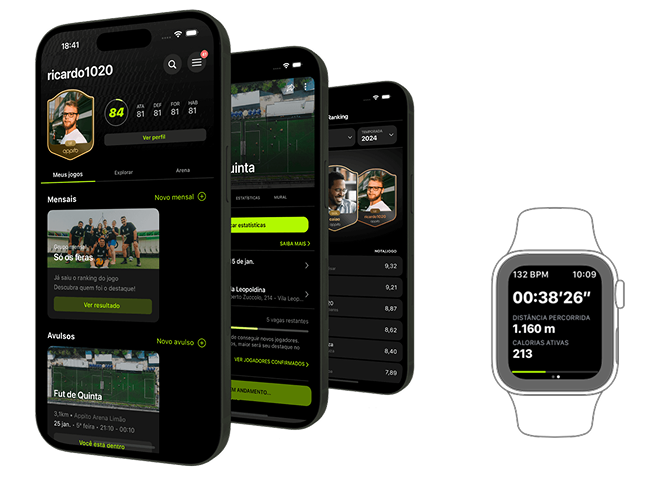
What we did
• Co-foundation and conceptualization
• Product vision and implementation
• Creative direction
• Building and empowering a community of amateur football players
• Sports complexes
Outcomes
Members 9 months
after launch
Active users 9 months
after launch
Games organized
per day by Sep 18

App of the day

Apple Editor's Choice

Presented at WWDC 17
Overview
More than 30 million Brazilians practice football frequently and experience the pain of organizing this sport that involves many players. Most facilities in Brazil are crumbling, fragmented and offer a poor experience to their customers.
Through technology, we founded Appito to reinvent this industry, creating the largest online football community in Brazil and now connecting it to its own branded offline facilities.
First we have created a fast growing active online amateur football community, with an app that helps players connect and organize their football teams and games, in real life.
The next step was to connect our community to our branded, technologically integrated fields to create a unique Online-to-Offline experience to our growing user base.
Connected through our proprietary technology our members were able to to extract the maximum value from the Appito ecosystem. The resulting ‘Appito effect’ drove accelerating demand for both our app and physical spaces.
Jschmuk, Member since Feb 2018
Awards & Recognition

Vampeta e craques do futsal participam de evento do aplicativo "Appito". Read More

Startup de São Paulo leva dados de estádios para as ‘peladas’ de fim de semana. Read More

Conheça a Appito, a sportech que funciona como o “Tinder do futebol”. Read More
Key takeaways
1. Connecting players through design and technology
2. A fully integrated Online-Offline experience
3. Appito Effect
Brazil has more amateur footballers than most countries have citizens — over 30 million people play regularly — but the experience around the sport hadn't caught up to the passion for it. Organizing a game still meant chasing people down in a group chat and hoping enough of them showed up.
We built an active and engaged online community with 5 core purposes: Automatize the organization of groups and teams 2. Connect players and teams in the community3. Track game statistics
4. Evolve and compare their progress5. Attract players and teams to our fields. We developed the perfect app so players could organize their football matches, from start to finish
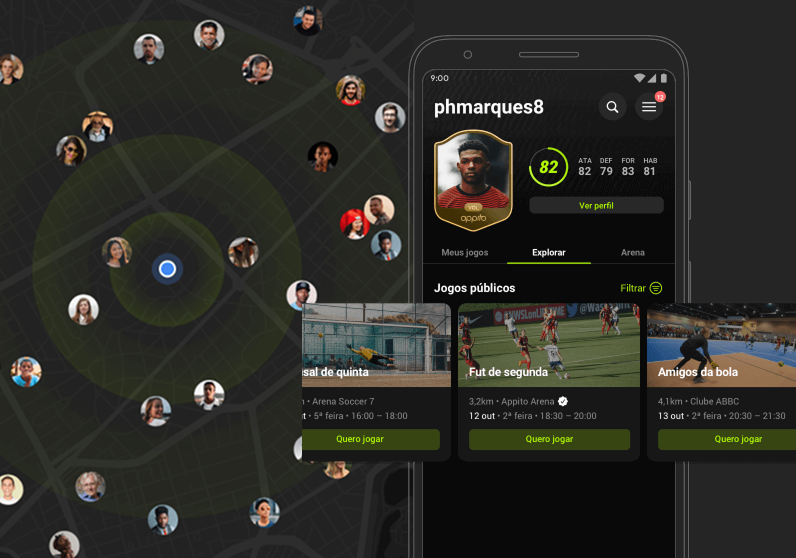
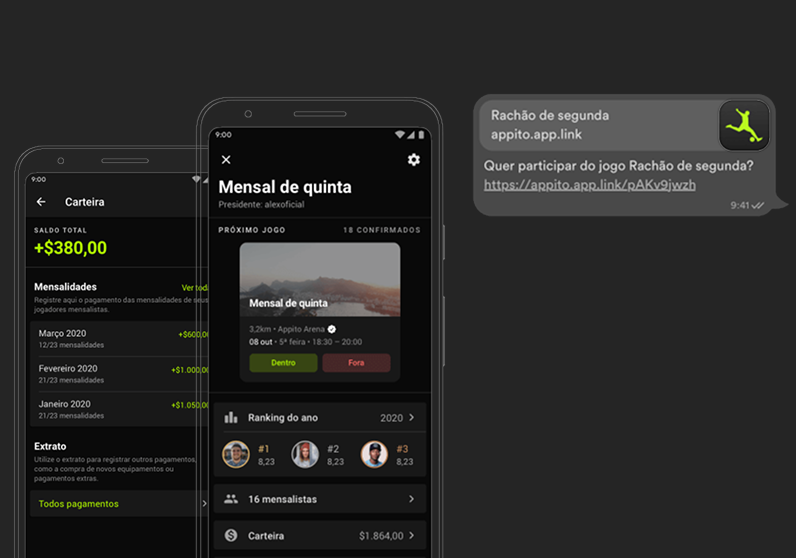
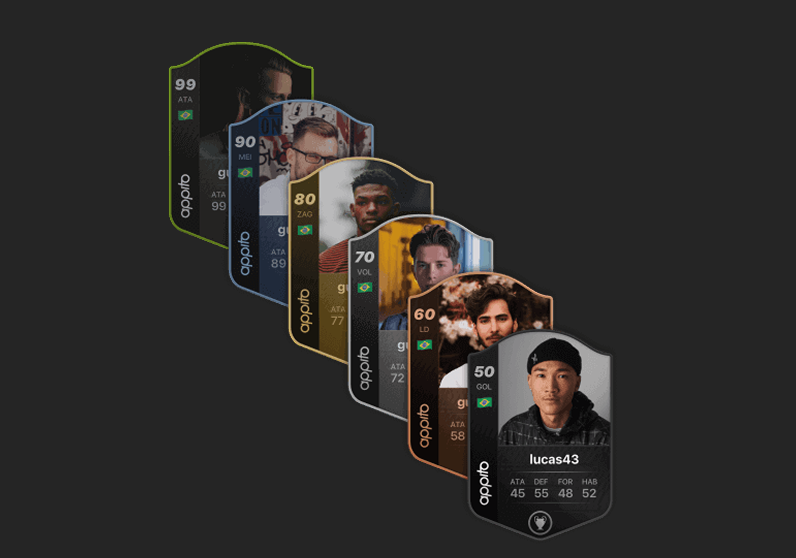
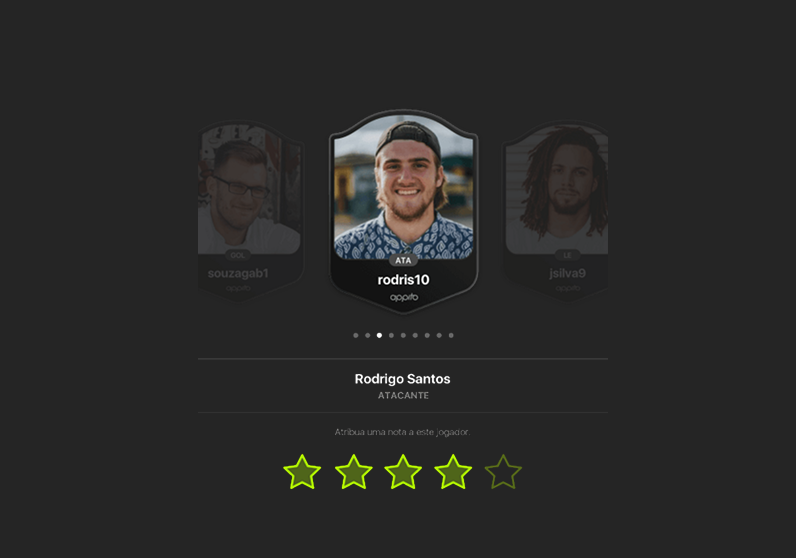
What makes the product distinct is how closely it borrows from gaming. Every player builds a card-style profile — position, overall rating, attributes — the same visual language as a sports video game. Stats and ratings update after every match, players climb a ranking inside their group, and progress unlocks the way a career mode would.
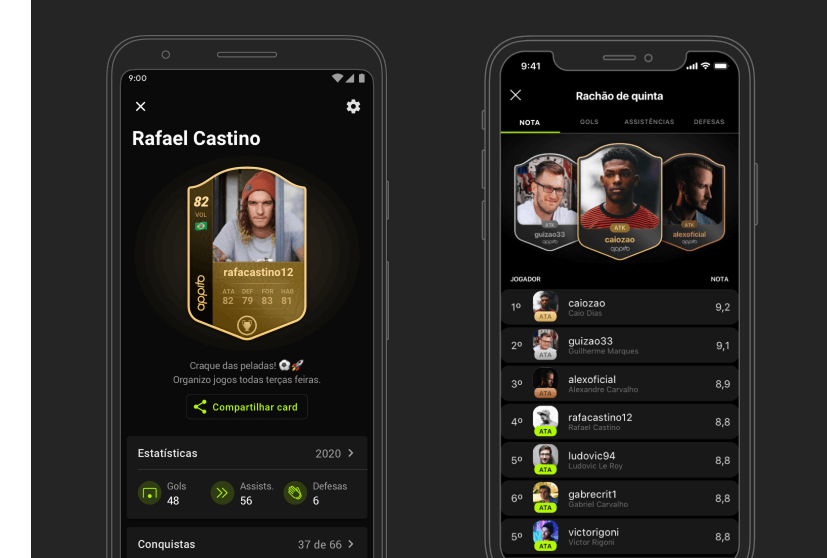
We built the app to function as contextually aware football companions that showed users the most relevant information. When it was time to start the match, the app would automatically switch to play mode, enabling team sort via the app, based on players' positions and skill levels, check-in and persistent access to your boarding pass. After every match, experiences celebrated the completion of your match and performance. An Apple Watch companion extends that into RSVPs and live health tracking mid-match.
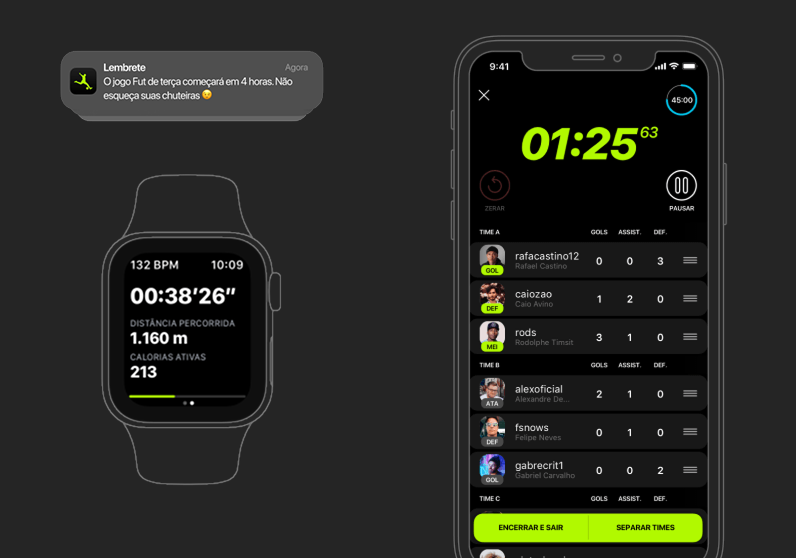
Apple even approached the brand to partner and develop new features like an integration with the watchOS — which were showcased at WWDC, the Worldwide Developers Conference, in 2017.
Most sports-booking products stop at the transaction: reserve a slot, get a confirmation, show up to somebody else's court. Appito was built to erase that line. First we proved the model with a SaaS for sport centers — booking, CRM, and scheduling software running in more than 50 facilities in São Paulo – Brazil. We exposed a market with no online booking, no marketing, and no economies of scale.
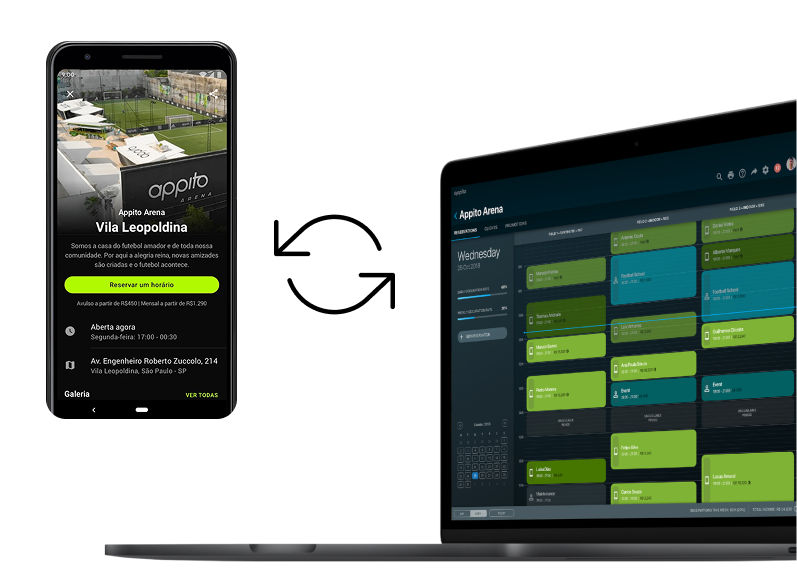
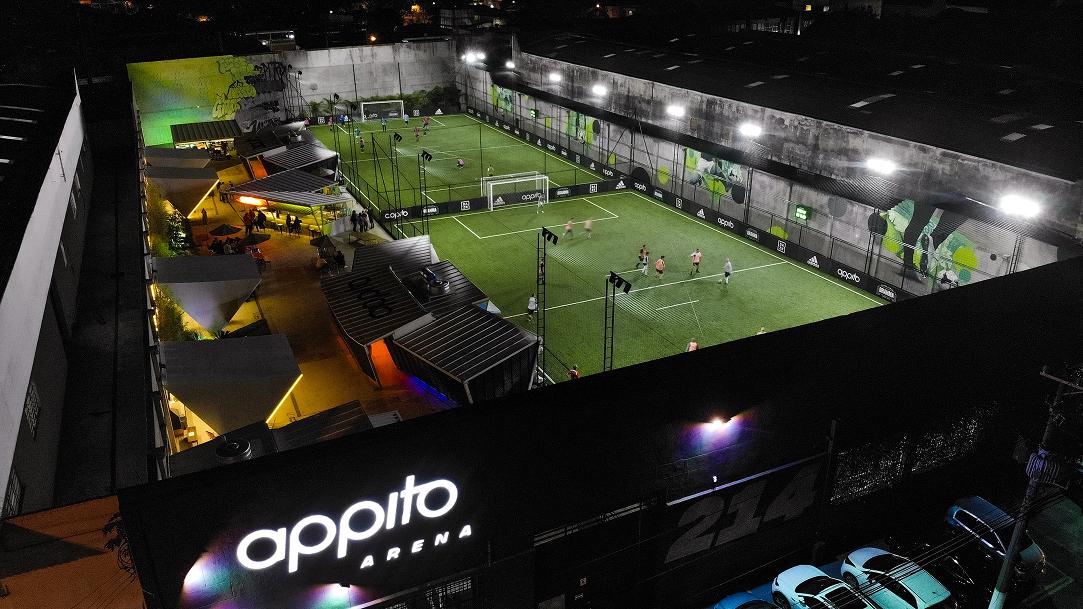
Appito Arena was the answer: branded, tech-integrated fields built on the same stack as the app, with modular architecture for fast, predictable rollout. The results show up in the unit economics — a traditional two-field center in São Paulo runs at 41% occupancy and a 25-month payback; our fist Appito-run center hits 58–60% occupancy and pays back in 14–16 months. Owning the online layer and the offline layer together isn't a branding choice — it's what makes the physical business perform better than anyone else's.
Neither the app nor the arenas would work as well alone. Together, we describes them as a single compounding loop — what the company calls, plainly, the Appito Effect. A stronger community drives better member experience, which drives more locations, which drives economies of scale and faster ramp-up — which drives more revenue, more data, and more members back into the app.
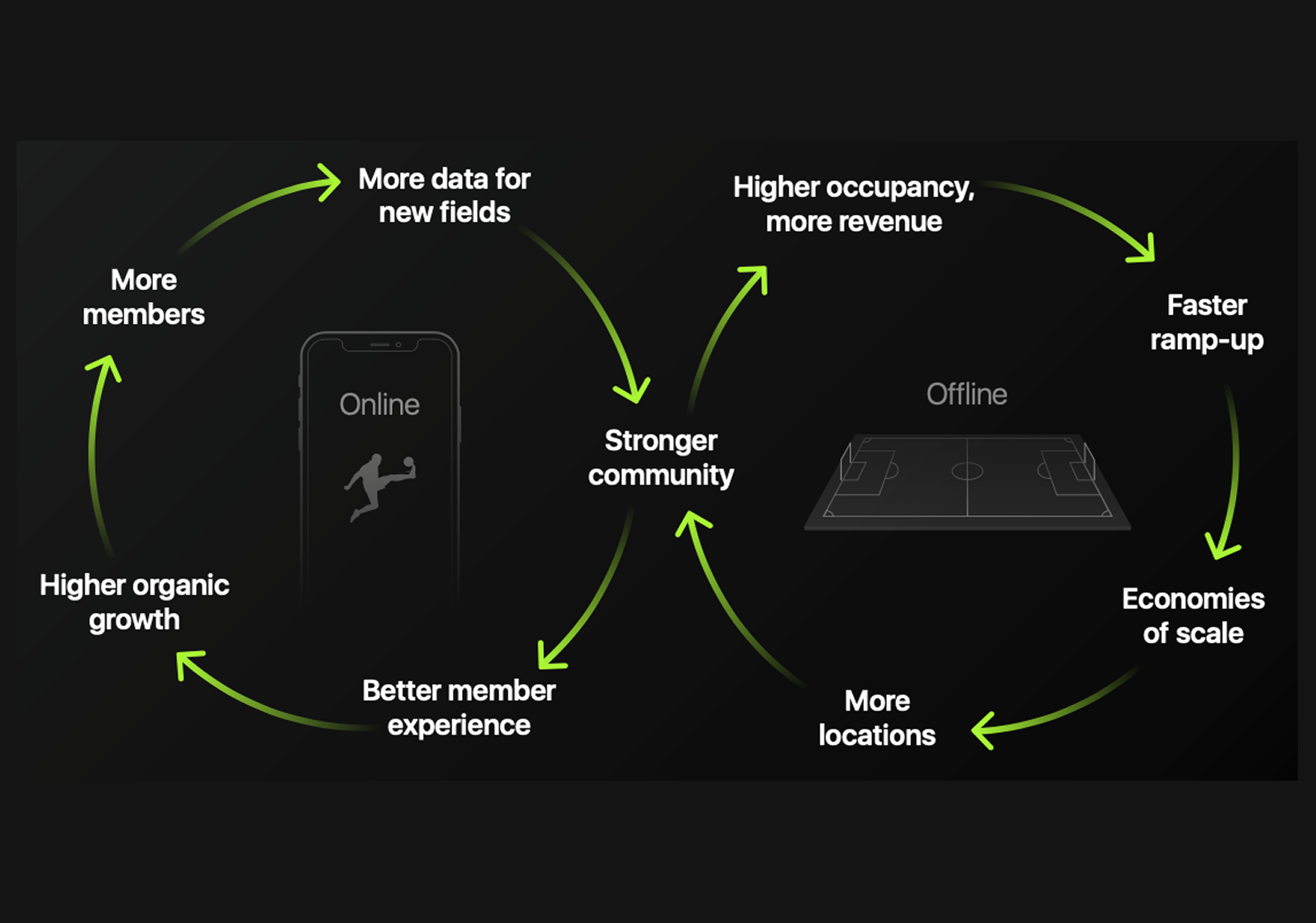
That loop is the moat. A competitor can build an app, or build nicer courts — not both, compounding, at once. It's why Appito's plan isn't app growth or field expansion in isolation, but both together: one flagship scaling toward operating centers, each new field launching into an already-engaged community of players, designing the future of amateur football.